
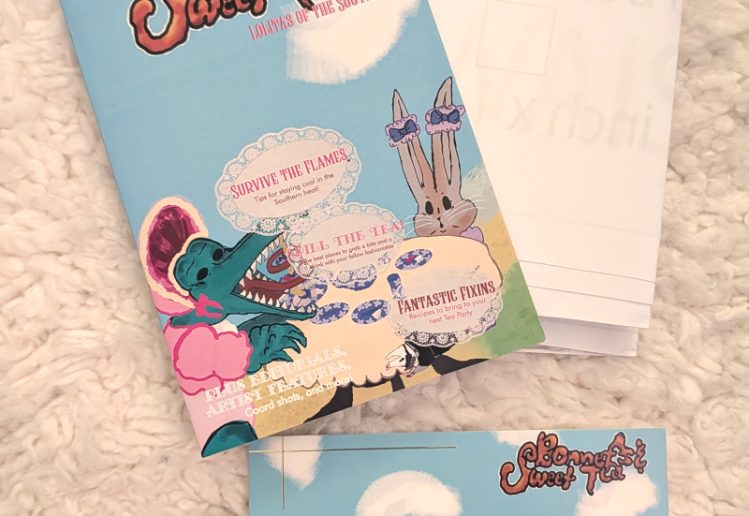
I received my pre-order of the Bonnets and Sweet Tea – Lolitas of the South zine published in 2025 and I am excited to share my thoughts on this cute little zine and the apron sewing pattern and the recipe that came with this zine.
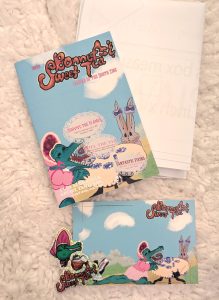
I have collected a few zines (besides the Gothic and Lolita mooks and Otome no Sewing and some other random Japanese publications) from Western lolitas and j-fashion fans, and of course I had to grab one that featured my geographical area in the United States of America. This one came with a sewing pattern which was special, so I wanted to give it a full review for anyone else who might have been interested in its contents. You can buy a digital download copy here at this store link! The physical zine is sold out but it came with a postcard and sticker you can still buy.
First up, the zine is small (half of letter size), printed in full color and packed with information, street snaps of southern US lolitas, interviews, lots of recipes, art and poetry, a survey and destination highlights. All of the information is relevant to lolitas living in the warm, humid region of the United States famous for its coastline, wildlife and multicultural cuisine but can be of interest to any lolita anywhere. The mascot, an alligator wearing a lolita bonnet, brought a chuckle out of me. For a first time production, it was cute and colorful and full of southern enthusiasm, simple but charming.
Now for the recipe review!
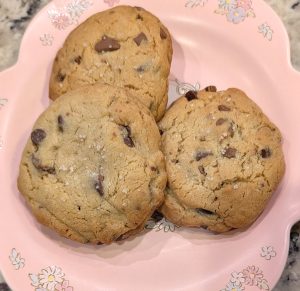
I chose to bake the chocolate chip cookies (submitted by Precious Bbyz) since I had all of those ingredients already. This was a very simple and straightforward recipe, but I love the combination of chocolate chips and chopped milk chocolate, so in this case, I used large baking chips and then small semi-sweet chocolate chips in a half batch. I sprinkled the tops with fleur de sel sea salt and it was a delicious and interesting addition to the sweetness of the chocolate. I slightly flatted the cookie dough balls and got a nice thick cookie that was soft and chewy in the middle. My brother also liked the recipe. 10/10
Finally, the pattern review that included the printed paper sheet folded for you to cut out and use directly (regular white bond paper, not tissue paper). Also feel free to view the creator’s process here on their blog.
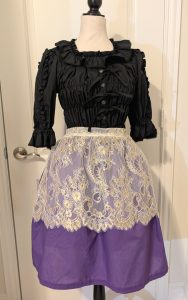
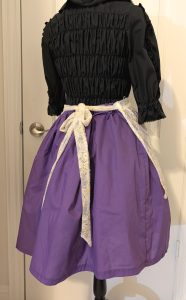
Here is the final product using a plain handmade skirt to show off the texture more. I used a gold and off-white lace mesh fabric that had a scalloped border which I had been saving for years but never used. I thought this was the perfect unique fabric for an apron for classic lolita styles. I actually have a short white lace apron already from a Japanese indie brand, so having it in gold for a more elegant look would fulfill a need in my wardrobe. The pattern was very clear, and I appreciate it printed full size so you don’t need to tape pieces of paper together which is the most annoying part of indie patterns. Now the instructions are less clear likely due to the lack of space allotted, so I will just point out the areas I had the most questions about to help anyone else sewing this pattern.
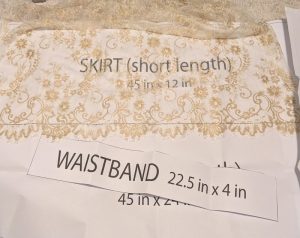
So obviously the first issue is my fabric choice, I probably should have used a stiff solid cotton that could hold a crease, this drapey lace did not hold a crease and because of the netting, made it difficult to find the threads if I needed to unpick. Secondly, the width of the lace is 38 inches of the usual 45 inches of most bolts in America, so that meant my apron was going to be less wide and less full when gathered. I took note of this and cut off 4 inches off the waistband to help with the fullness, however, I feel most lolita skirts get a 2.5 up to 3 times gather, so even if I had a 45 inch wide fabric, at 2 times gather, the apron would still not match the poof of most lolita skirts. Lastly, the waistband’s proprtion would make this the ideal apron for a service apron, like if you were actually planning to cook in this apron, but I felt the silhouette did not match brand sweet lolita maid/waitress apron styles, which would have a narrower gathered waist spreading out to a wider hem (aka, not ideal for cooking because fabric at your waist is exposed). But this is my style preference and fabric choice fail, so doesn’t reflect on the pattern itself.
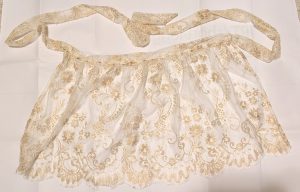
Now for the stumbling blocks I came across that might have been resolved with a drawn diagram or a different angle photograph in the instructions. First, I did not realize this was going to be attached together all at once, so you are sandwiching the pieces into the waistband and then top stitching everything in one fell swoop, so I kept placing the pieces right sides together, but I figured it out eventually when I read the last step (pro tip – don’t be like me, read all the steps first before starting.) Secondly, I am still mystified by which direction the pleated backside of the waist ties goes into the waistband. I just placed the waist ties the way I felt they should be. Finally, sewing it all at once meant that if you had slippery fabric like I did, you are going to have to make corrections because not everything will align perfectly even with lots of pins. I couldn’t see the white thread to seam rip mistakes, so I just hand-basted all of the layers together after a few false starts on the sewing machine. The final result turned out much neater than the first attempt lol. Overall, I do appreciate this pattern and instructions, I just think 2 more photos or a drawn diagram of the apron parts right before you sew everything together would have helped my comprehension. Now I’m excited to have a new handmade and totally one of a kind apron to wear with my coords!
That’s it from me! I hope this review was interesting and I hope you do purchase this zine, or any other Japanese fashion zine, and support the creatives and fans who keep this fashion thriving in 2026!